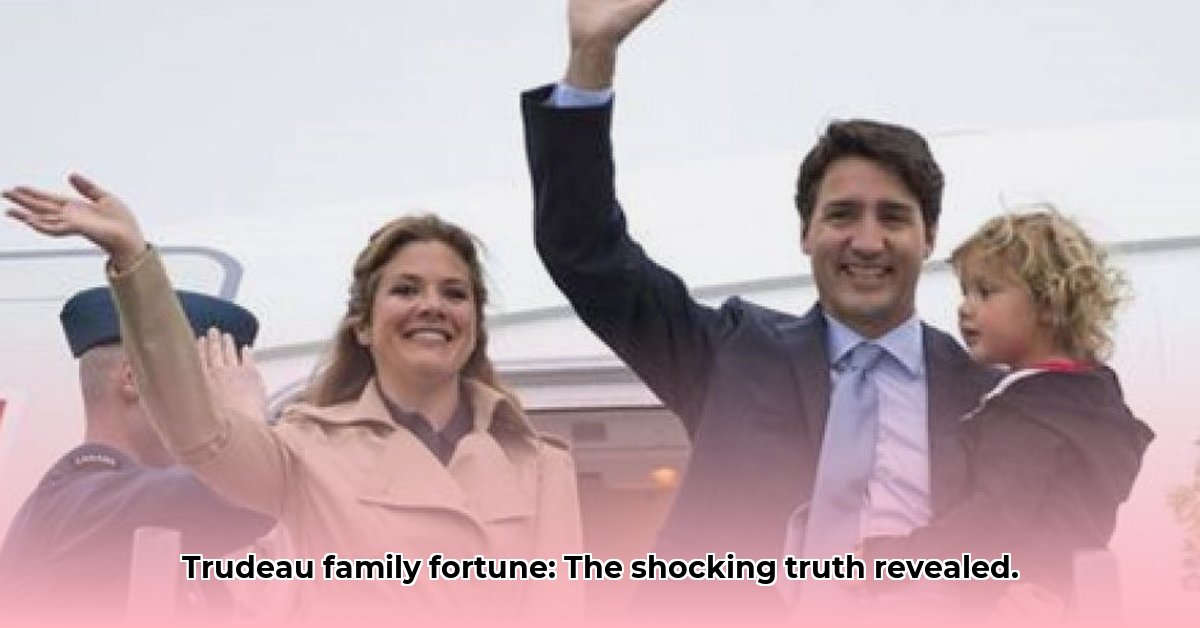
The Trudeau family name is synonymous with Canadian politics. But the family's substantial wealth, accumulated over generations, adds a complex layer to their public image and raises questions about the interplay between inherited privilege and political power. This article delves into the details of the Trudeau family's financial history, exploring its origins, its transmission across generations, and its implications for Canadian politics. For more details on Justin Trudeau's wealth, see his net worth here.
The Grandfather's Legacy: Building a Foundation
The foundation of the Trudeau family's wealth was laid by Charles-Émile Trudeau, Justin Trudeau's grandfather. A prominent businessman in early 20th-century Montreal, Charles-Émile's entrepreneurial success spanned diverse ventures, including gas stations, real estate, and amusement parks. These weren’t small-scale operations; they were substantial enterprises generating considerable income. This accumulated wealth provided the bedrock for the family's future prosperity, a testament to his business acumen and foresight. How much did his initial investments grow over time? Precise figures remain elusive, highlighting the challenge of tracing the full extent of the family's financial history.
Pierre Trudeau: Inheritance and Political Ascent
Pierre Elliott Trudeau, Justin Trudeau's father and a transformative figure in Canadian politics, inherited a significant portion of this family wealth. This inheritance inevitably raises questions about its influence on his political career. Did his financial security provide an advantage, allowing him to dedicate himself fully to politics without the typical financial pressures faced by many politicians? While some argue it played a crucial role in his trajectory, others emphasize his political skills and charisma. The debate underscores the complexities of examining the relationship between wealth and political success. What is undeniable is the substantial inheritance he passed on.
Justin Trudeau's Inheritance and Public Scrutiny
Justin Trudeau, Canada's current Prime Minister, inherited a considerable sum from his father, publicly documented as over $1.2 million 1. Combined with his Prime Minister's salary and earnings from past speaking engagements, his net worth is substantial. However, precise figures remain difficult to ascertain due to the family's use of trusts and other investment structures. This lack of complete transparency fuels public interest and scrutiny, prompting ongoing questions about the ethical implications of substantial family wealth in politics. How much influence has this had on policy decisions, and to what extent does it affect public trust? The answers remain complex and are open to various interpretations.
Transparency and Ethical Considerations: A Necessary Dialogue
Justin Trudeau utilizes a blind trust to manage his investments, a common practice among politicians aimed at preventing conflicts of interest. However, the effectiveness of blind trusts in achieving true transparency remains a point of contention. How much information should the public have access to regarding a politician's finances? This question underscores the ongoing debate about balancing transparency and the protection of personal financial privacy in the public sphere. The need for clear ethical guidelines and robust oversight mechanisms is paramount.
The Pierre Elliott Trudeau Foundation: A Complicating Factor
The Pierre Elliott Trudeau Foundation, a charitable organization named after the former Prime Minister, adds another layer to the family's financial story. The Foundation receives substantial donations, and some of its financial dealings have attracted controversy. This raises further questions about the Foundation's financial operations and any potential links to the family's overall wealth. Greater transparency in the Foundation’s financial records would be essential to allay public concerns. How can charitable foundations maintain their integrity while navigating potential conflicts of interest related to the families of powerful political figures?
Strategic Wealth Management: A Multi-Generational Approach
The Trudeau family's financial history suggests a sophisticated and long-term approach to wealth management. The use of numbered companies and carefully structured investments, while perfectly legal, raises questions about wealth concentration and its implications for societal equity. Does this level of generational wealth accumulation contribute to an uneven playing field, particularly in the political realm? This is a complex social issue with profound implications for democratic fairness.
A Legacy of Wealth and Its Societal Impact
The Trudeau family’s wealth represents more than just a collection of assets; it’s a legacy shaped by entrepreneurial success, strategic wealth management, and significant political influence. The scale of this wealth prompts broader societal discussions about the fair representation of diverse socioeconomic backgrounds in a democracy, the increasing gap between the rich and poor, and the role of inherited privilege in shaping political landscapes. These issues demand ongoing public debate and examination.